100+ Cybersecurity Topics for Presentations: Best PPT & Seminar Ideas


Explore 150+ cybersecurity topics for presentations, seminars, and PPTs. Discover trending cyber security ideas for students, IT professionals, and researchers.
Cybersecurity is a broad, evolving field, making it essential for individuals, businesses, and governments to stay up to date on the latest threats and defenses.
Presentations on cybersecurity can help in raising awareness and educating teams or clients on how to protect sensitive data from ever-increasing cyberattacks.
Whether you’re a student, professional, or educator, finding the right topic can be challenging due to the sheer variety of issues in this domain.
To make your task easier, we’ve compiled over 100 cybersecurity topics that will not only engage your audience but also highlight the critical areas in modern cybersecurity.
Categories of Cybersecurity Topics
- Cyber Threats and Attacks
- Cyber Defense and Protection Strategies
- Laws and Regulations
- Emerging Technologies
- Industry-Specific Cybersecurity
- Tools and Frameworks
- Case Studies
- Ethical Hacking and Penetration Testing
- Data Privacy and Compliance
- Career Development in Cybersecurity
Now, let’s dive deeper into each category to give you a more focused view of what each offers.
100+ Cybersecurity Topics for Presentations
1. Cyber Threats and Attacks
This category explores the various types of cyberattacks and how they can infiltrate systems. Topics include:
- Phishing Attacks: How phishing emails deceive users into providing sensitive information.
- Ransomware Attacks: A detailed look into ransomware, how it works, and its effects on businesses.
- Distributed Denial of Service (DDoS): What DDoS attacks are and how to defend against them.
- Man-in-the-Middle (MITM) Attacks: How cybercriminals intercept communications between two parties.
- Advanced Persistent Threats (APTs): Long-term, targeted attacks against specific entities.
- Zero-Day Exploits: Unpatched vulnerabilities in software exploited by attackers.
- Password Attacks: Types of password attacks, including brute force and dictionary attacks.
- SQL Injection Attacks: How attackers can manipulate databases through SQL code injection.
- Social Engineering: The human element of hacking and how attackers manipulate individuals.
- Insider Threats: How employees or other insiders pose risks to cybersecurity.
- Botnets: Networks of compromised devices used to carry out large-scale cyberattacks.
- Supply Chain Attacks: Cyberattacks that target an organization by exploiting vulnerabilities in its supply chain.
2. Cyber Defense and Protection Strategies
Discuss various methods and technologies used to defend against cyberattacks:
- Firewalls and Network Security: The role of firewalls in defending networks.
- Endpoint Protection: Ensuring security across all endpoints (e.g., desktops, laptops, mobile devices).
- Intrusion Detection and Prevention Systems (IDS/IPS): Monitoring and preventing unauthorized access.
- Encryption: The role of encryption in securing sensitive data.
- Multi-factor Authentication (MFA): Adding an extra layer of protection beyond passwords.
- Vulnerability Management: How to identify, prioritize, and address vulnerabilities.
- Incident Response Planning: Steps organizations should take in response to a breach.
- Cybersecurity Audits: Why regular security audits are essential.
- Security Information and Event Management (SIEM): Tools for real-time security event monitoring.
- Zero Trust Architecture: A modern security approach that assumes no user or device is inherently trustworthy.
3. Laws and Regulations
Understand the legal aspects of cybersecurity, including compliance and standards:
- General Data Protection Regulation (GDPR): How businesses can comply with Europe’s data protection regulation.
- California Consumer Privacy Act (CCPA): U.S. data protection laws and their global impact.
- Health Insurance Portability and Accountability Act (HIPAA): Cybersecurity standards in healthcare.
- Federal Information Security Management Act (FISMA): U.S. government cybersecurity regulations.
- Cybersecurity Maturity Model Certification (CMMC): A new requirement for defense contractors.
- ISO/IEC 27001: International standards for information security management.
- Payment Card Industry Data Security Standard (PCI DSS): Ensuring security for card payment systems.
- Data Breach Notification Laws: The importance of notifying individuals affected by a data breach.
- Cybersecurity Executive Orders: U.S. executive orders focusing on improving national cybersecurity.
4. Emerging Technologies
Cybersecurity is evolving alongside new technologies. Topics in this area include:
- Artificial Intelligence (AI) in Cybersecurity: How AI is used to detect and defend against cyber threats.
- Blockchain Security: The potential of blockchain in providing secure transactions and data storage.
- Quantum Computing and Cybersecurity: The future impact of quantum computing on encryption.
- 5G Security Concerns: Risks and challenges associated with the rollout of 5G networks.
- Cloud Security: Protecting data and applications in cloud environments.
- Internet of Things (IoT) Security: How to secure millions of interconnected devices.
- Biometric Security: Using fingerprints, facial recognition, and other biometric methods for security.
- Cybersecurity for Smart Cities: The future of urban environments and their cybersecurity needs.
- Cybersecurity in the Metaverse: Security concerns in virtual worlds and augmented reality spaces.
5. Industry-Specific Cybersecurity
Explore how different industries approach cybersecurity:
- Cybersecurity in Healthcare: Protecting patient data and complying with healthcare regulations.
- Financial Sector Cybersecurity: Protecting banking and financial services from cybercriminals.
- Retail Cybersecurity: Securing online and in-store transactions.
- Cybersecurity in Education: How educational institutions safeguard their networks.
- Government Cybersecurity: How national security is maintained in a digital world.
- Cybersecurity in Manufacturing: Protecting industrial control systems (ICS) from cyberattacks.
- Cybersecurity in the Energy Sector: Safeguarding critical infrastructure from cyber threats.
6. Tools and Frameworks
Discuss popular cybersecurity tools and frameworks that help in identifying, preventing, and mitigating cyber threats:
- Wireshark: A packet analyzer used to troubleshoot network traffic and detect cyberattacks.
- Metasploit: A popular penetration testing framework used by ethical hackers.
- Nmap: Network scanning for vulnerabilities.
- Kali Linux: A distribution specifically designed for penetration testing and cybersecurity auditing.
- Splunk: A powerful tool for SIEM and security monitoring.
- OWASP Top 10: A list of the most critical web application security risks.
- Cybersecurity Kill Chain: A framework to understand how cyberattacks are executed.
- Cybersecurity Control Frameworks (NIST, ISO 27001): Standards for managing cybersecurity risks.
7. Case Studies
Real-world examples of cyberattacks and how organizations responded:
- Equifax Data Breach: Lessons learned from one of the largest data breaches in history.
- WannaCry Ransomware Attack: A global ransomware attack and its impact on organizations.
- Colonial Pipeline Attack: A ransomware attack that disrupted fuel supplies in the U.S.
- Target Data Breach: How a point-of-sale system breach affected millions of customers.
- Sony Pictures Hack: A politically motivated cyberattack and its ramifications.
- SolarWinds Hack: A sophisticated supply chain attack on government systems.
8. Ethical Hacking and Penetration Testing
Ethical hackers help in strengthening the defenses of an organization:
- Introduction to Ethical Hacking: The role of ethical hackers in cybersecurity.
- Penetration Testing Phases: From reconnaissance to reporting vulnerabilities.
- Bug Bounty Programs: How ethical hackers earn rewards by finding vulnerabilities.
- Ethical Hacking Tools: Popular tools used in penetration testing.
- Red Team vs. Blue Team Exercises: How simulated attacks can prepare organizations.
- Common Vulnerabilities Exploited by Hackers: A deep dive into the vulnerabilities hackers often target.
9. Data Privacy and Compliance
Topics that highlight the importance of data protection and privacy:
- Data Encryption Best Practices: How to protect sensitive data using encryption techniques.
- Data Anonymization: Techniques to anonymize personal data to comply with regulations.
- Privacy by Design: Building privacy into products and services from the ground up.
- Third-Party Data Sharing Risks: The potential security risks associated with third-party services.
- Cybersecurity and Privacy for Remote Workers: Protecting data in an increasingly remote workforce.
- Dark Web Monitoring: How organizations track compromised data on the dark web.
10. Career Development in Cybersecurity
Learn how to build a career in cybersecurity:
- Cybersecurity Career Paths: A guide to the different roles in the cybersecurity industry.
- Certifications in Cybersecurity: Common certifications include CISSP, CEH, and CompTIA Security+.
- Skills Needed to Become a Cybersecurity Professional: Essential skills for success.
- Cybersecurity Job Trends: Where the industry is headed and emerging roles.
- Cybersecurity Internships: Opportunities for students to gain hands-on experience.
- How to Become a Cybersecurity Consultant: Steps to starting your own cybersecurity consultancy.
Also Read: 50+ History Presentation Topics For 2026
Create Cybersecurity Presentations Instantly with AI
Coming up with cybersecurity topics is only the first step; the next challenge is turning those ideas into a clear, engaging presentation.
Instead of spending hours designing slides, researching structure, and formatting content, you can use MagicSlides AI to automatically generate a complete presentation in seconds.
With MagicSlides, you can simply enter your cybersecurity topic – such as “Ransomware Attacks,” “Zero Trust Security,” or “IoT Security Risks” and the AI will instantly create a structured PowerPoint or Google Slides presentation.
Why Use MagicSlides for Cybersecurity Presentations?
- Instant Creation – Convert any cybersecurity topic into a ready-to-use presentation in seconds.
- AI-Generated Content – Automatically generates titles, bullet points, and explanations.
- Professional Slide Design – Clean layouts designed for classrooms, meetings, and conferences.
- Works with Google Slides & PowerPoint – Export presentations easily.
- Perfect for Students & Professionals – Ideal for seminars, research presentations, and corporate training.
How to Create a Cybersecurity Presentation in Seconds?
Step 1. Open MagicSlides AI Presentation Maker.
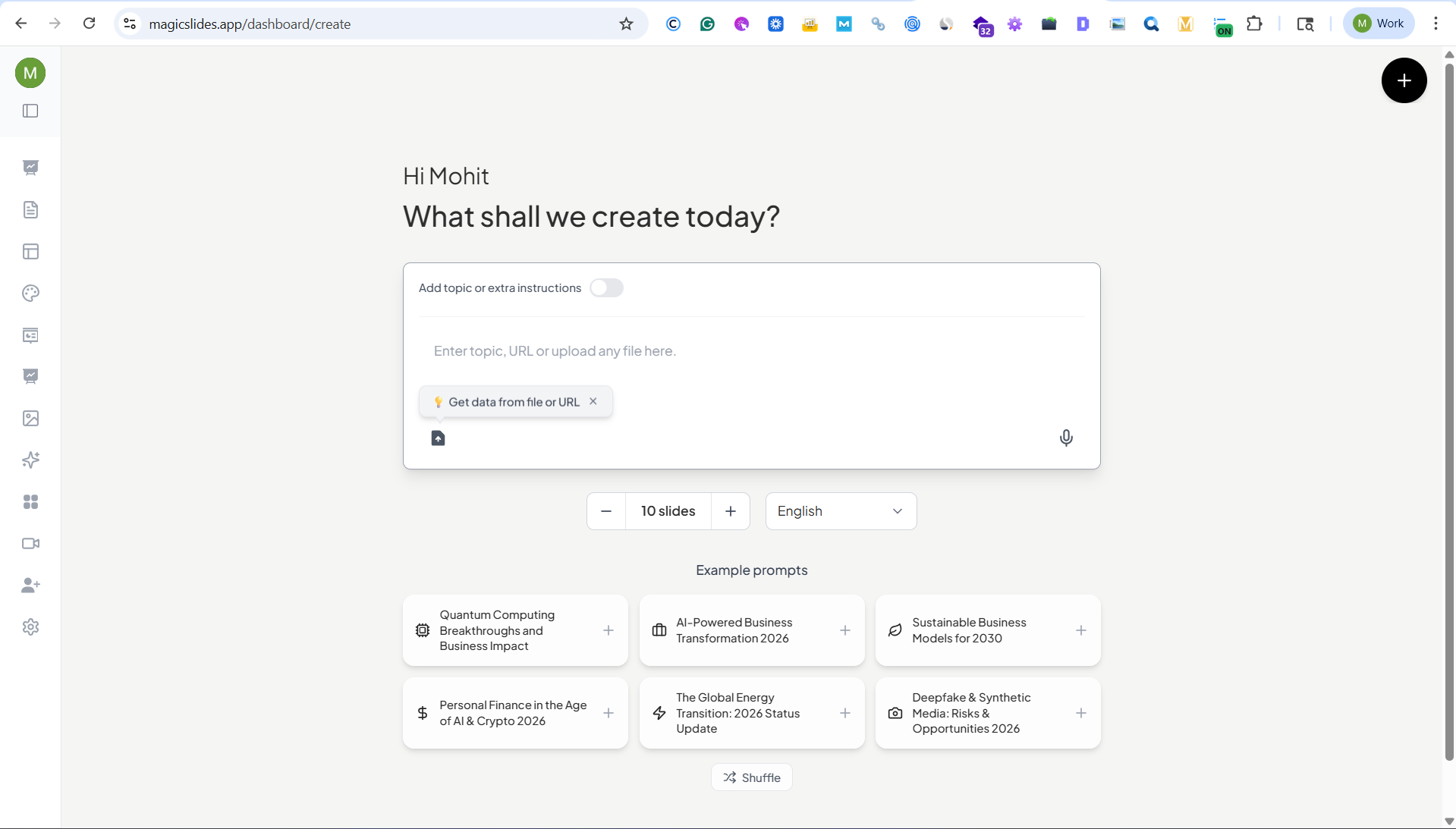
Step 2. Enter your topic (e.g., “Ransomware Attacks Explained”).
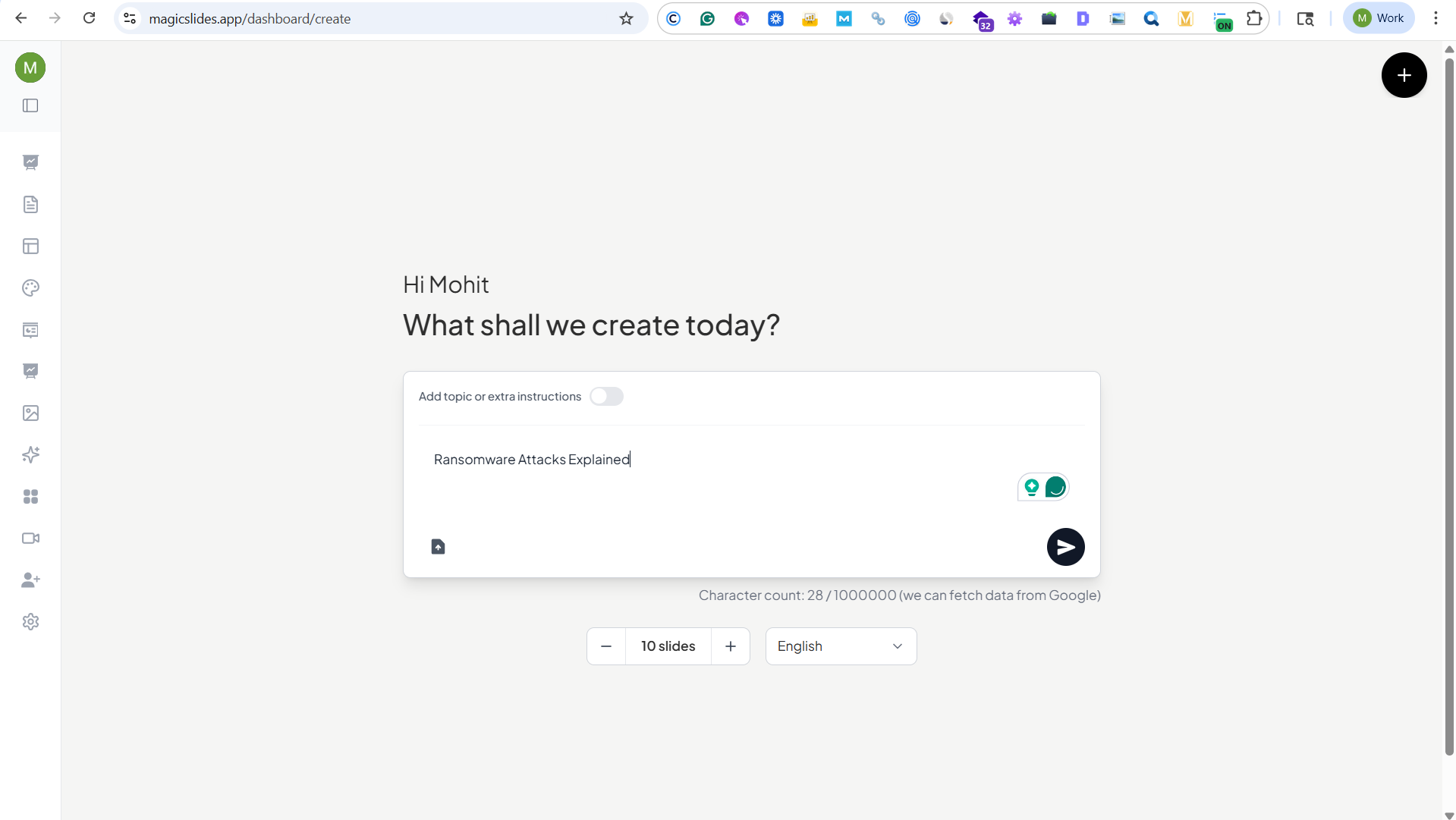
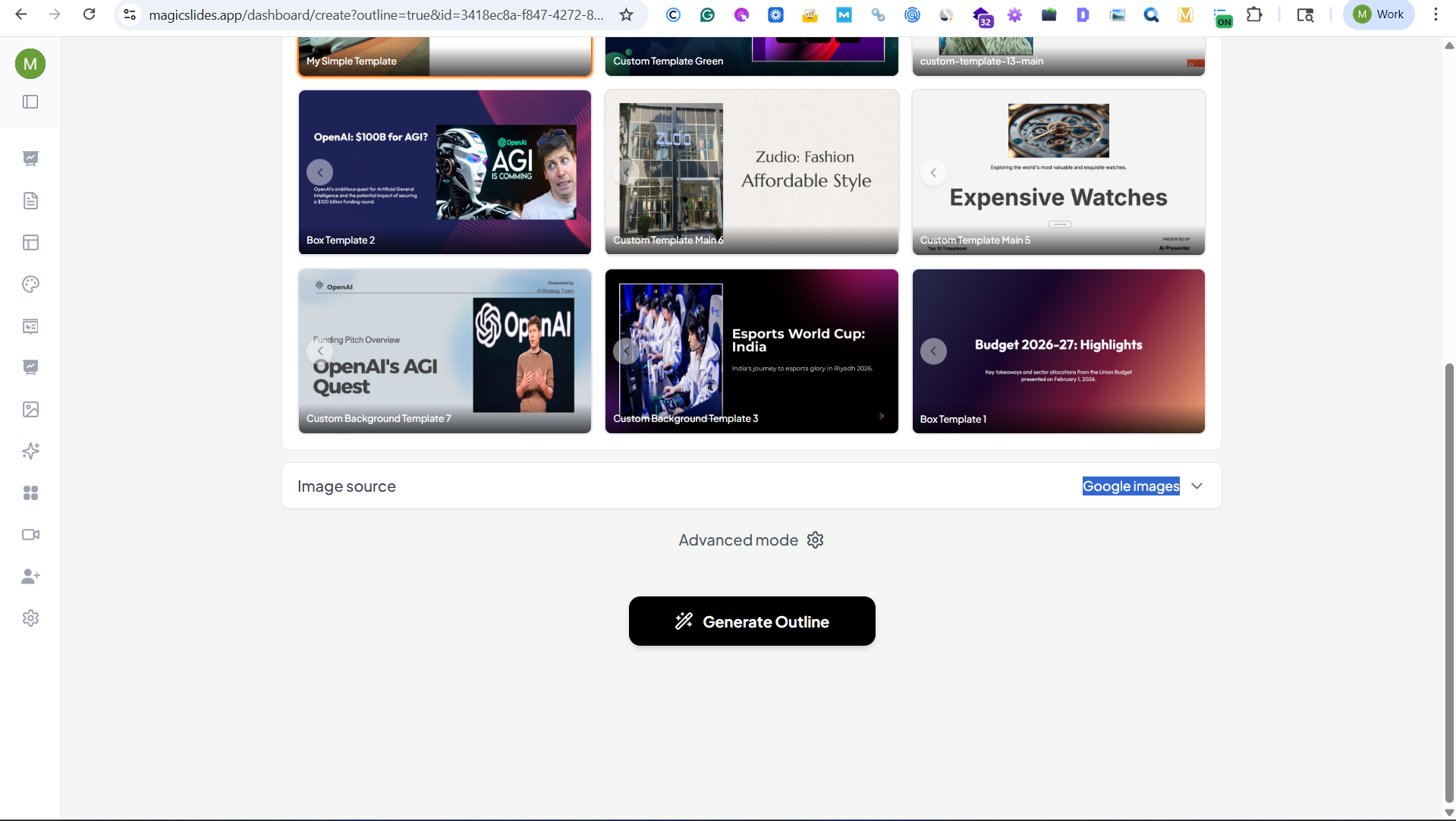
Step 3. Choose Template, Image source, and check Advanced mode, if required, and click on Generate Outline.
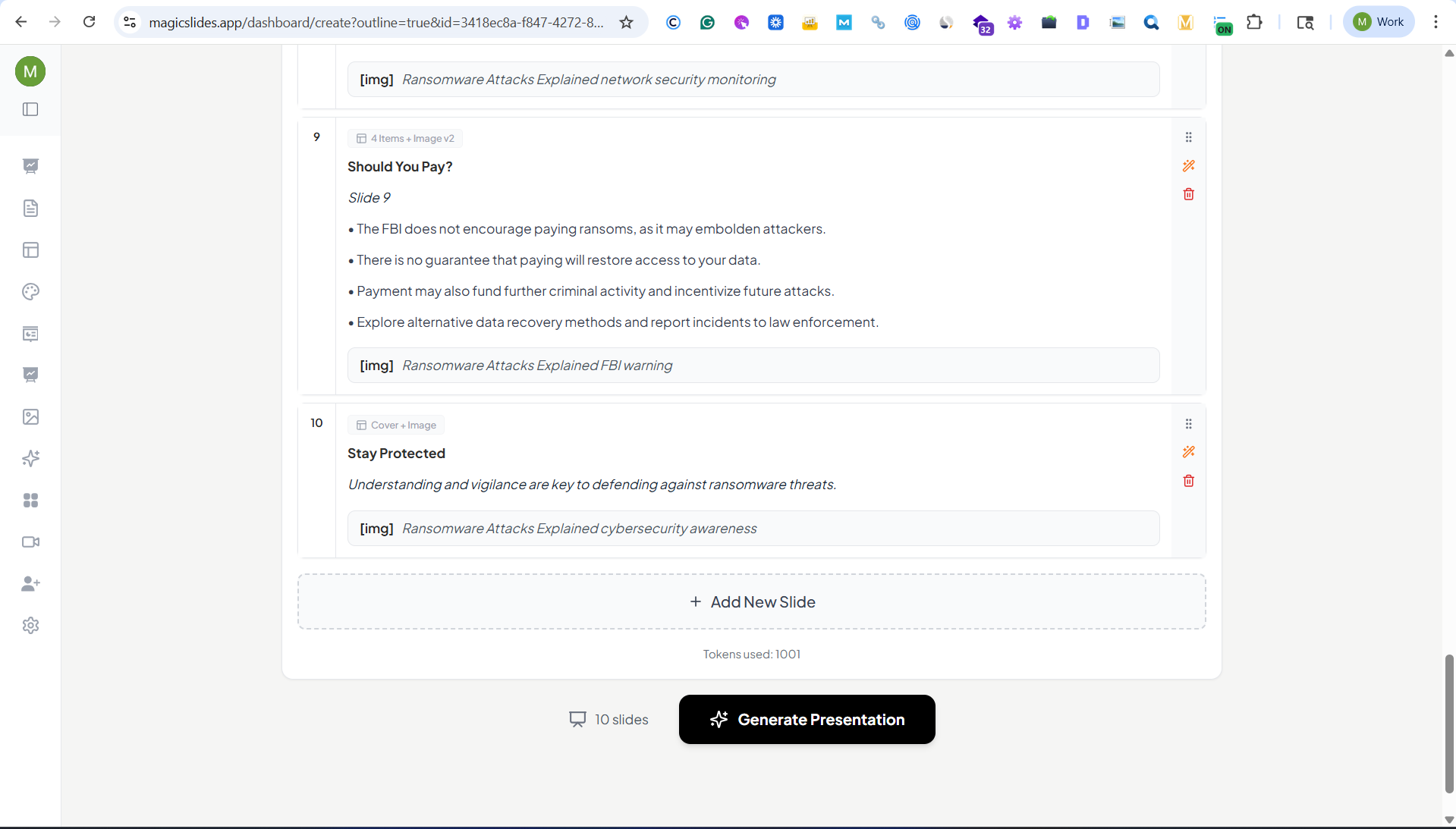
Step 4. Check the outline and make the changes if required. Click Generate Presentation.
Step 5. Download or present directly from Google Slides.
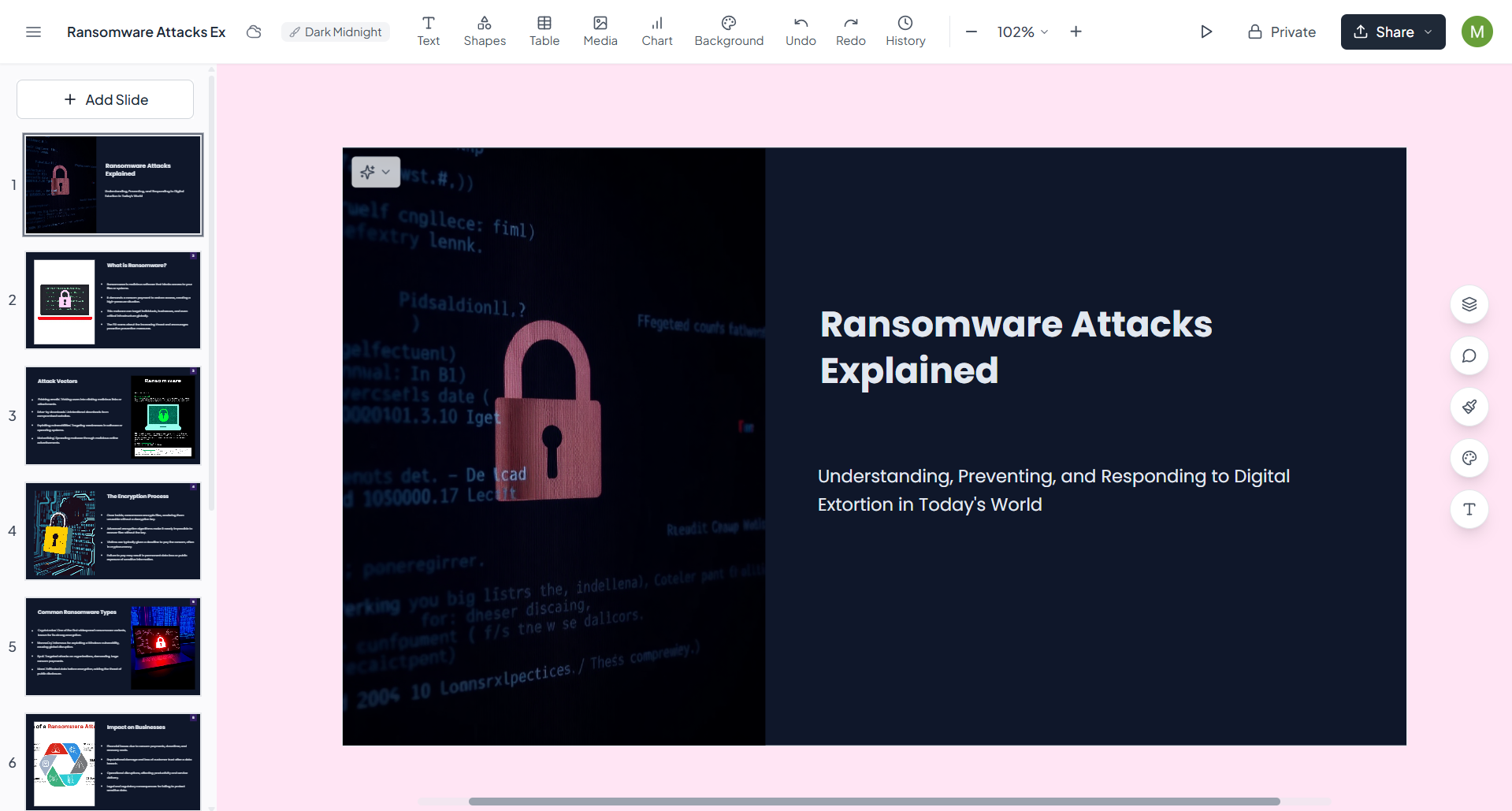
In just a few seconds, you’ll have a fully structured cybersecurity presentation ready to present.
Conclusion
Cybersecurity is a vast and critical field that continues to evolve rapidly. With the increasing reliance on digital infrastructure, businesses, governments, and individuals must stay informed about potential threats and how to defend against them. Presentations on cybersecurity are an excellent way to raise awareness and educate audiences on these important topics.
Whether you’re focusing on the technical aspects of cyberattacks, discussing legal frameworks, or diving into industry-specific issues, this list of over 100 topics provides ample material to create an engaging and informative presentation.


