Interesting Biology Topics for Presentations: 100+ Captivating Ideas


Discover over 100 engaging biology presentation topics, including genetics, ecology, and biotechnology, with detailed insights for an impactful presentation.
Biology is a fascinating field that delves into the complexities of life, ranging from the molecular level to entire ecosystems.
Whether you’re a student preparing for a class project or a professional seeking to engage an audience, finding the right topic is crucial for delivering an impactful presentation.
To help you get started, we’ve compiled a comprehensive list of over 100 interesting biology topics that cover various branches of the field, along with detailed information and insights to make your presentation both informative and engaging.
Table of Contents
- Molecular Biology Topics
- Genetics and Evolution
- Human Biology and Physiology
- Microbiology and Immunology
- Botany and Plant Science
- Ecology and Environmental Biology
- Marine Biology and Oceanography
- Zoology and Animal Behavior
- Biotechnology and Bioinformatics
- Ethics and Controversial Topics in Biology
- Health and Disease
- Miscellaneous Biology Topics
- Tips for Creating an Effective Biology Presentation
100+ Captivating Ideas for Biology Presentation
Genetics and Molecular Biology Topics
| Topic | Create | Brief Description |
| DNA Structure and Function | Create | Explore the double helix and its role in heredity. |
| CRISPR Technology: Editing the Blueprint | Create | Discuss CRISPR’s potential in genome editing and medicine. |
| Genetic Mutations and Their Effects | Create | Investigate how genetic mutations influence organisms. |
| Epigenetics: Environmental Influence on Genes | Create | Explain how environmental factors alter gene expression. |
| The Human Genome Project | Create | Highlight the breakthroughs in mapping human DNA. |
Ecology and Environmental Biology Topics
| Topic | Create | Brief Description |
| The Impact of Climate Change on Ecosystems | Create | Analyze how climate change affects biodiversity and habitats. |
| Deforestation and Its Ecological Effects | Create | Discuss the consequences of large-scale deforestation on global ecosystems. |
| Coral Reefs: Importance and Threats | Create | Explore the ecological significance of coral reefs and their endangerment. |
| Biodiversity: Why It Matters | Create | Explain the importance of maintaining biological diversity for ecosystem health. |
| Renewable Energy and Sustainability | Create | Discuss the role of renewable energy in preserving natural resources. |
Human Biology and Physiology Topics
| Topic | Create | Brief Description |
| The Nervous System: Brain and Neurons | Create | Examine how the brain and nervous system coordinate body functions. |
| The Immune System: Defending the Body | Create | Explore how the immune system fights infections and diseases. |
| Cardiovascular System: Heart and Blood Flow | Create | Discuss how the heart and blood vessels maintain circulation. |
| The Role of Hormones in the Human Body | Create | Investigate how hormones regulate various physiological processes. |
| Human Evolution: From Ancestors to Modernity | Create | Trace the evolutionary journey of Homo sapiens. |
Microbiology and Cell Biology Topics
Evolution and Developmental Biology Topics
Biotechnology and Innovations Topics
1. Molecular Biology Topics
Molecular biology focuses on the structure and function of molecules that make up cells and organisms. Here are some thought-provoking topics:
- The Central Dogma of Molecular Biology: Explore the flow of genetic information from DNA to RNA to protein.
- CRISPR-Cas9 Technology: A revolutionary tool for gene editing and its applications in medicine and agriculture.
- Protein Folding and Misfolding: How proteins attain their functional structures and the consequences of misfolding in diseases like Alzheimer’s.
- RNA Interference: Mechanisms and applications in gene regulation and therapeutic research.
- Mitochondrial DNA and Its Role in Inheritance: Understanding the unique inheritance patterns of mitochondrial DNA.
2. Genetics and Evolution
Genetics and evolution are foundational concepts in biology that explain the diversity of life on Earth. Consider these topics:
- The Human Genome Project: Mapping the human genome and its implications for personalized medicine.
- Epigenetics: How environmental factors influence gene expression without altering the DNA sequence.
- Evolutionary Psychology: Understanding human behavior through the lens of evolution.
- Genetic Engineering in Agriculture: The impact of GMOs on food security and biodiversity.
- Speciation and Adaptive Radiation: Mechanisms by which new species evolve and diversify.
3. Human Biology and Physiology
Human biology covers the study of the human body and its complex systems. Here are some engaging topics:
- The Human Microbiome: The role of gut bacteria in health and disease.
- Neuroplasticity and Brain Health: How the brain changes in response to learning and experience.
- Hormonal Regulation in the Human Body: The endocrine system and its role in maintaining homeostasis.
- Cardiovascular Health and Diseases: Causes, prevention, and treatment of heart diseases.
- The Physiology of Stress: How stress affects the body and mind, and coping mechanisms.
4. Microbiology and Immunology
Microbiology deals with microorganisms, while immunology focuses on the immune system. These topics are perfect for exploring unseen worlds:
- Antibiotic Resistance: Causes, consequences, and solutions to the growing problem of resistant bacteria.
- Vaccines and Immunization: How vaccines work and their role in public health.
- The Human Virome: Viruses that inhabit the human body and their impact on health.
- Pathogenic Bacteria: How bacteria cause diseases and the body’s defenses against them.
- Probiotics and Prebiotics: The science behind beneficial bacteria and their health benefits.
5. Botany and Plant Science
Botany is the study of plants, a crucial part of life on Earth. Here are some intriguing topics:
- Photosynthesis and Its Variations: Understanding C3, C4, and CAM photosynthesis.
- Plant Hormones and Growth Regulation: How plants control their growth and development.
- Carnivorous Plants: Adaptations that allow plants to trap and digest insects.
- Plant-Animal Interactions: Co-evolution and mutualistic relationships between plants and animals.
- The Role of Plants in Carbon Sequestration: How forests and other vegetation mitigate climate change.
6. Ecology and Environmental Biology
Ecology explores the relationships between organisms and their environments. Consider these topics:
- Biodiversity Hotspots: Areas of high biodiversity and their importance for conservation.
- Ecological Succession: The process by which ecosystems recover after disturbances.
- Climate Change and Its Impact on Ecosystems: Effects on species distribution and habitat loss.
- The Role of Keystone Species in Ecosystems: How certain species maintain ecological balance.
- Urban Ecology: The study of ecological processes in urban environments.
7. Marine Biology and Oceanography
Marine biology examines the rich and diverse life in the oceans. Here are some compelling topics:
- Coral Reefs and Their Conservation: The importance of coral reefs and threats they face.
- Deep-Sea Ecosystems: Unique adaptations of organisms living in extreme environments.
- Marine Mammal Behavior: Communication and social structures of whales and dolphins.
- The Role of Phytoplankton in the Ocean: Primary producers and their role in the marine food web.
- Ocean Acidification and Its Effects: How changing pH levels affect marine life.
8. Zoology and Animal Behavior
Zoology covers the study of animals, while animal behavior explores their actions and interactions. Consider these topics:
- Social Structures in Animal Communities: Hierarchies and social roles in primates, wolves, and ants.
- Mimicry and Camouflage: How animals use these strategies for survival.
- Endangered Species and Conservation Efforts: Strategies for protecting threatened animals.
- The Evolution of Flight in Birds and Bats: Anatomical adaptations that enable flight.
- Animal Intelligence: Problem-solving abilities and tool use in animals like crows and octopuses.
9. Biotechnology and Bioinformatics
These fields apply technology to biological research and data analysis. Here are some engaging topics:
- Synthetic Biology: Designing and constructing new biological parts and systems.
- Bioinformatics and Big Data in Biology: Analyzing large datasets to understand complex biological processes.
- Tissue Engineering and Regenerative Medicine: Growing tissues and organs in the lab.
- Bioprinting: 3D printing of biological tissues and its applications in medicine.
- Gene Therapy: Techniques for correcting genetic disorders.
10. Ethics and Controversial Topics in Biology
These topics often spark debate and are excellent for engaging discussions:
- Stem Cell Research: Potential benefits and ethical concerns.
- Genetically Modified Organisms (GMOs): Balancing innovation and safety.
- Cloning: Scientific possibilities and moral dilemmas.
- Animal Testing in Biomedical Research: Necessity versus cruelty.
- Bioprospecting and Biopiracy: Ethical implications of using biological resources from indigenous lands.
11. Health and Disease
Understanding diseases and health is vital for improving quality of life. Consider these topics:
- The Biology of Cancer: How cancer develops and progresses at the cellular level.
- Infectious Diseases and Epidemics: Case studies of historical and modern outbreaks.
- The Human Immune System: How the body defends itself against pathogens.
- Chronic Diseases and Lifestyle: The biology behind diabetes, hypertension, and obesity.
- Mental Health and Neurobiology: The biological basis of mental health disorders.
12. Miscellaneous Biology Topics
For those looking for unique or niche topics, consider these ideas:
- Astrobiology: The search for life beyond Earth and what it can teach us.
- Forensic Biology: How biological evidence is used in criminal investigations.
- Human Evolution: The fossil record and our understanding of human ancestry.
- The Role of Epigenetics in Behavior: How gene expression affects behavior across generations.
- Biological Rhythms and Sleep: The science of circadian rhythms and sleep disorders.
13. Tips for Creating an Effective Biology Presentation
To make your biology presentation stand out, consider the following tips:
- Start with a Hook: Begin with a fascinating fact or question to grab the audience’s attention.
- Use Visuals: Include diagrams, images, and videos to illustrate complex concepts.
- Simplify Complex Information: Break down difficult topics into understandable chunks.
- Relate to Real-World Applications: Show how the topic is relevant to everyday life.
- Practice Delivery: Rehearse your presentation to ensure smooth delivery and timing.
Turn Biology Topics into Stunning Presentations in Minutes
Creating a biology presentation doesn’t have to be time-consuming. Once you’ve selected a topic from the list above, the next challenge is turning your ideas into clear, visually engaging slides. This is where MagicSlides Topic-to-PPT Converter makes a real difference.

MagicSlides helps students, educators, and professionals convert biology topics or text into structured, presentation-ready slides using AI without manual formatting or design effort.
How to Convert a Biology Topic into PPT Using MagicSlides?
Step 1. Enter Your Topic or Content

Paste your biology topic (for example, CRISPR Technology or Photosynthesis) or add brief notes/text.
Step 2. Choose Slide Preferences

Select the number of slides, tone (academic, simple, or professional), and layout style.
Step 3. Generate Slides Instantly
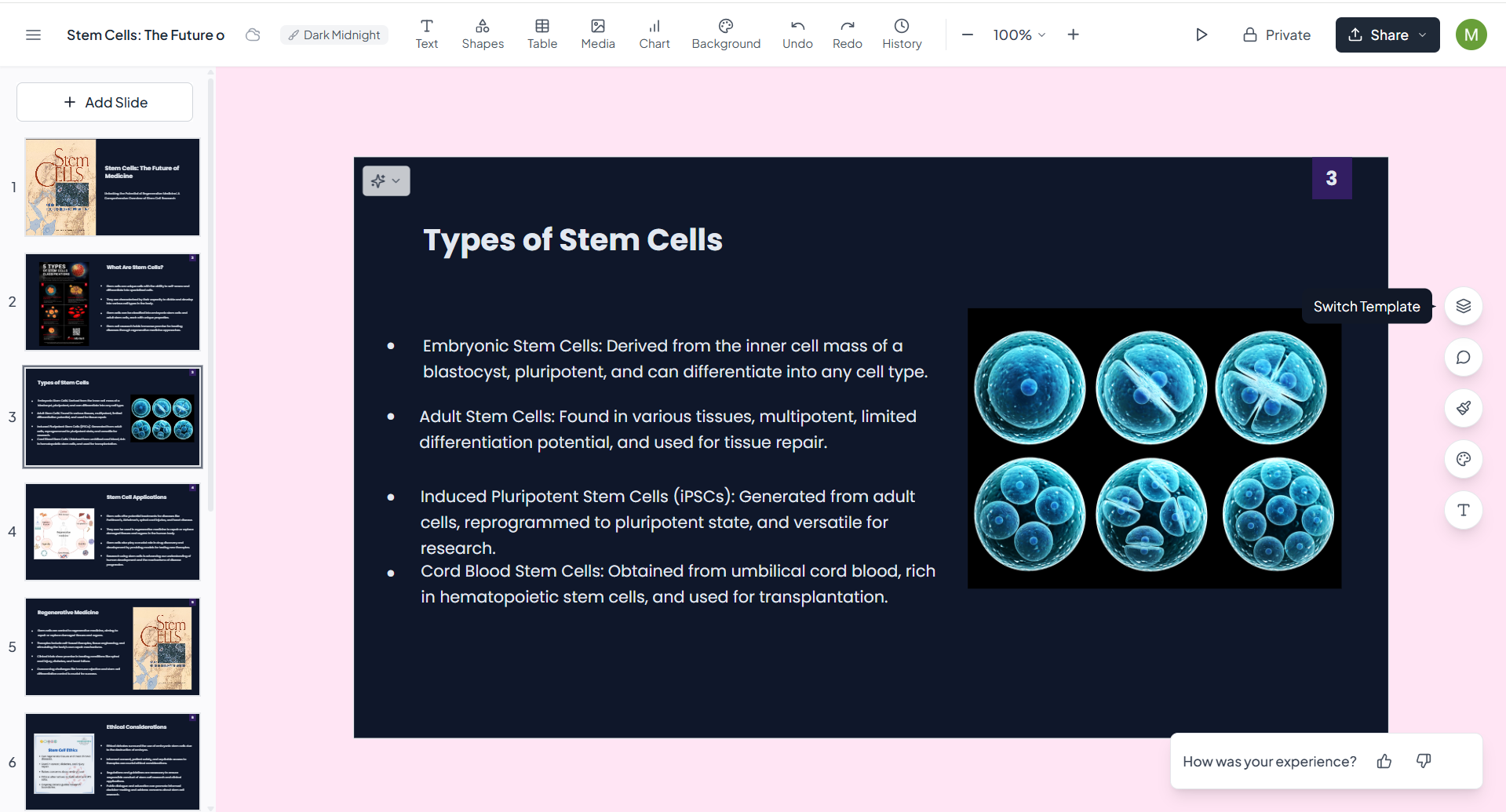
MagicSlides automatically creates well-structured slides with headings, bullet points, and logical flow.
Step 4. Edit and Download
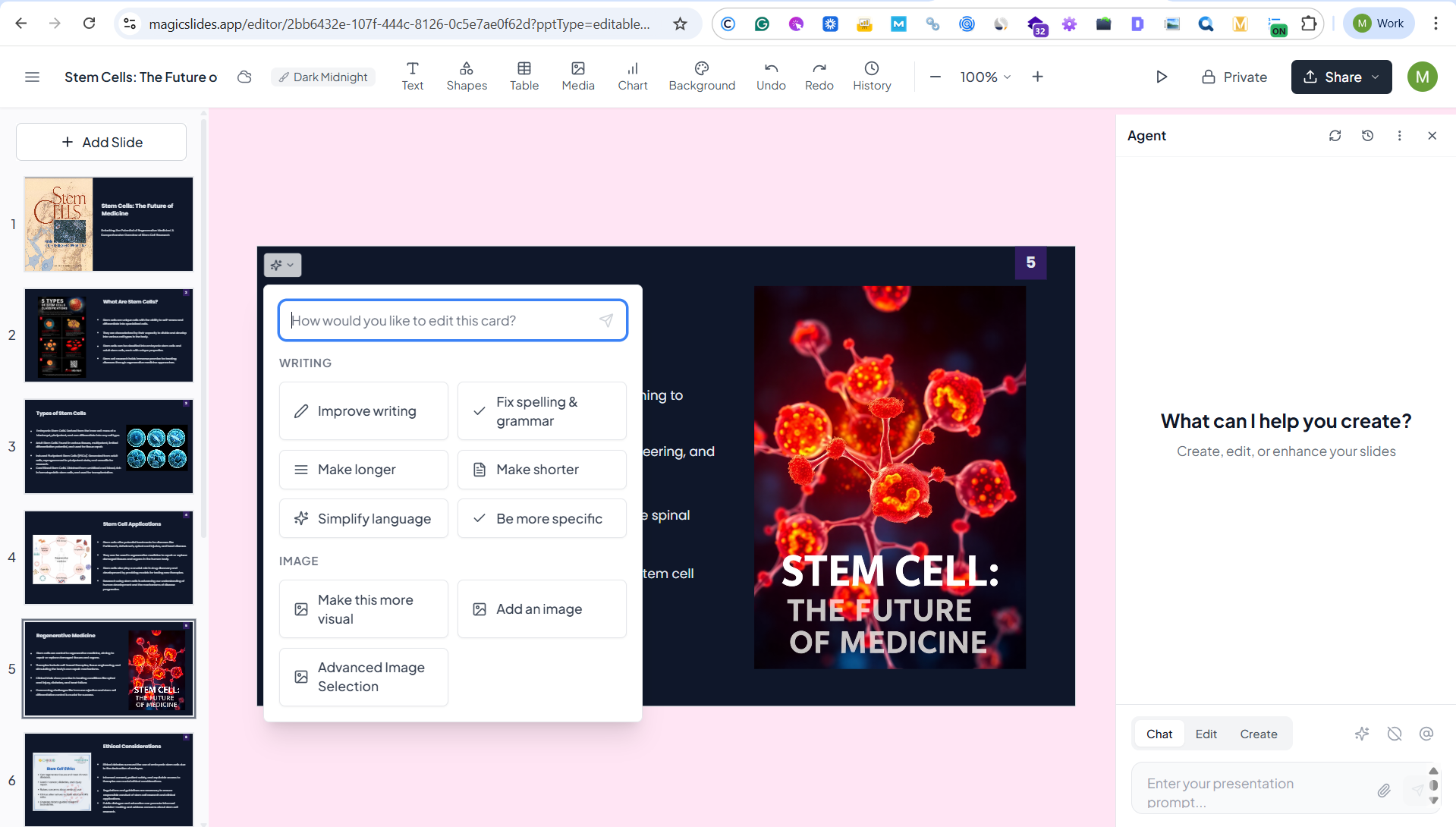
Customize the content if needed and download the presentation in PPT or Google Slides format.
Advantages of Using MagicSlides for Biology Presentations
- Saves Time: Converts topics into slides in seconds, not hours.
- Clear Structure: Organizes complex biology concepts into easy-to-understand sections.
- Student-Friendly Language: Ideal for school, college, and non-technical audiences.
- Consistent Design: Clean, professional slide layouts without design skills.
- Perfect for Exams & Classrooms: Helps you focus on learning and delivery, not formatting.
Whether you’re preparing a presentation on genetics, ecology, or biotechnology, MagicSlides ensures your biology content looks polished, engaging, and easy to present.
Conclusion
With over 100 topics to choose from, you’re now well-equipped to create a compelling and informative biology presentation. Whether you’re interested in molecular biology, ecology, or biotechnology, there’s a topic here to capture the curiosity of any audience. Remember to tailor your presentation to the level of your audience and use engaging visuals and examples to make complex concepts accessible. Happy presenting!


