150+ Controversial Debate Topics for Students, Schools, and Colleges


Explore 150+ controversial debate topics for students, colleges, schools, and public speaking. Find thought-provoking ideas for any debate.
Controversial debate topics are subjects that create strong disagreements because people have different opinions, beliefs, and values. These topics usually focus on areas like politics, education, technology, ethics, social media, and human rights.
Some popular topics to discuss now are things like Artificial Intelligence, climate change, cancel culture, and online privacy. The best debate topics let both sides share arguments and real-life examples.
Debating on these topics can help you think critically, communicate better, and feel more confident when speaking in public. If you are looking for topics to discuss in class, group chats, or competitions, picking the right one makes the debate more interesting.
For example-
- Should AI replace human jobs?
- Is social media harmful to teenagers?
- Should college education be free?
What Are Controversial Debate Topics?
Controversial debate topics are issues where people strongly disagree because of personal beliefs, ethics, politics, social justice, or values. These controversial topics usually have no single correct answer, which makes discussions more engaging and thought-provoking.
Popular controversial topics often include education, free speech, religion, AI topics, climate change, and social media. The best controversial topics to debate allow both sides to present logical arguments supported by facts and examples.
For example, some people believe social media improves communication, while others think it harms mental health. Similarly, debates around AI focus on innovation versus job loss and privacy concerns.
Examples of controversial topics to discuss:
- Should schools ban smartphones?
- Is freedom of speech absolute?
- Should governments regulate AI?
- Is online learning better than classroom learning?
How to Choose the Best Controversial Topics to Debate?
When we talk about the right debate topics, we want to choose ones that make our discussions more interesting and fair. The most controversial debate topics are ones that people care about, are easy to learn about, and have points on both sides.
We should pick topics that are connected to what’s happening today, like artificial intelligence, social media, schools, or the environment. We should not pick topics that are too easy or have answers that everyone already knows.
It is also a good idea to think about who we are talking to. Some controversial debate topics for adults may not be good for kids.
For example the question “Should intelligence replace teachers?” is a good one because it has good arguments on both sides. But the question “Is education important?” is too general and not as interesting.
Good controversial topics to talk about should help us think critically and communicate well. Have respectful conversations. Controversial debate topics, like intelligence and climate change, are great because they are relevant and make us think. We can learn a lot from discussing these topics. They can help us become better at talking to each other.
What Are the Most Controversial Topics for Debate?
When you are trying to pick the controversial debate topics, you have to think about who is listening, how old they are, and what you want to get out of the conversation. The controversial topics that are good for a classroom are not always the same as the ones that are good for talking in front of a lot of people.
Controversial Debate Topics for Students
| Topic | Best For |
|---|---|
| Should homework be banned? | School Debates |
| Are school uniforms necessary? | Students |
| Should exams be removed? | Education Discussions |
| Is online learning better than classroom learning? | Colleges |
| Should coding be mandatory in schools? | Technology Education |
| Are grades a fair measure of intelligence? | Academic Debates |
| Should schools teach financial literacy? | High School Students |
| Are private schools better than public schools? | Education Topics |
| Should students use AI tools for homework? | Modern Debate Topics |
| Should schools start later in the morning? | Teen Discussions |
Technology Controversial Debate Topics
| Topic | Best For |
|---|---|
| Will AI replace human jobs? | Technology Debates |
| Is social media harmful to teenagers? | Youth Discussions |
| Should TikTok be banned? | Current Issues |
| Is online privacy dead? | Adults |
| Should governments regulate AI? | Public Speaking |
| Are smartphones making people less social? | Students |
| Is cryptocurrency reliable? | Finance & Tech |
| Should facial recognition be banned? | Ethics Debates |
| Is AI-generated art real art? | Creative Discussions |
| Should children have screen time limits? | Parenting Topics |
Political Controversial Debate Topics
| Topic | Best For |
|---|---|
| Should voting be mandatory? | Politics Students |
| Is freedom of speech absolute? | Public Debates |
| Should immigration laws become stricter? | Adults |
| Is capitalism better than socialism? | College Debates |
| Should governments censor misinformation? | Media Discussions |
| Should wealthy people pay higher taxes? | Economics |
| Is nationalism harmful? | Political Science |
| Should prisons focus on rehabilitation? | Law Students |
| Is universal basic income realistic? | Economic Debates |
| Should social media platforms regulate content? | Modern Politics |
Social & Ethical Controversial Topics
| Topic | Best For |
|---|---|
| Should euthanasia be legal? | Ethics Debates |
| Is abortion morally acceptable? | Adults |
| Should the death penalty exist? | Law Discussions |
| Is cancel culture toxic? | Social Media Debates |
| Should influencers be regulated? | Digital Culture |
| Is privacy more important than security? | Society Discussions |
| Are beauty standards harmful? | Teenagers |
| Should hate speech laws exist? | Human Rights |
| Is animal testing ethical? | Science Debates |
| Should human cloning be allowed? | Advanced Discussions |
Funny Controversial Debate Topics
| Topic | Best For |
|---|---|
| Is cereal a soup? | Fun Classroom Debates |
| Are cats better than dogs? | Icebreakers |
| Should pineapple go on pizza? | Group Discussions |
| Is coffee better than tea? | Friends & Students |
| Is winter better than summer? | Casual Debates |
| Are reality shows fake? | Entertainment Topics |
| Should emojis count as language? | Fun Discussions |
| Is sleeping with socks weird? | Light Debates |
| Are superhero movies overrated? | Pop Culture |
| Should movies have intermissions? | Entertainment Debates |
Create Debate Presentations Faster with AI within Seconds
If you want to talk about it in public or want to prepare any kind of project, the best option is to use smart technology, i.e., AI. I have one suggestion for you: opt for the smart solution, MagicSlides AI Presentation Maker Tool, which provides you with all the controversial topics at once within seconds.
The tool makes it easier to turn controversial topics to discuss into professional presentations within minutes. Whether you are working on politically controversial topics, AI debates, social issues, or classroom discussions, the software helps organize your ideas clearly.
How MagicSlides AI Helps with Controversial Debate Topics
- Converts debate topics into ready-to-use presentations
- Generates structured slide outlines automatically
- Helps organize arguments for both sides of the debate
- Saves time for students and teachers
- Creates visually clean and engaging slides
- Useful for classrooms, public speaking, and competitions
- Works well for AI, politics, education, and ethical debate topics
- Controversial Topics to Write About (Essays & Blogs)
Example Use Cases
| Controversial Topic Ideas | How Software Helps |
|---|---|
| Should AI replace human jobs? | Creates slides with pros, cons, and examples |
| Is social media harmful to teenagers? | Organizes research into clear presentation points |
| Should college education be free? | Builds educational debate slides quickly |
| Is climate change the biggest global threat? | Helps structure facts, statistics, and arguments |
Steps to Create Controversial Debate Topic Presentations Easily
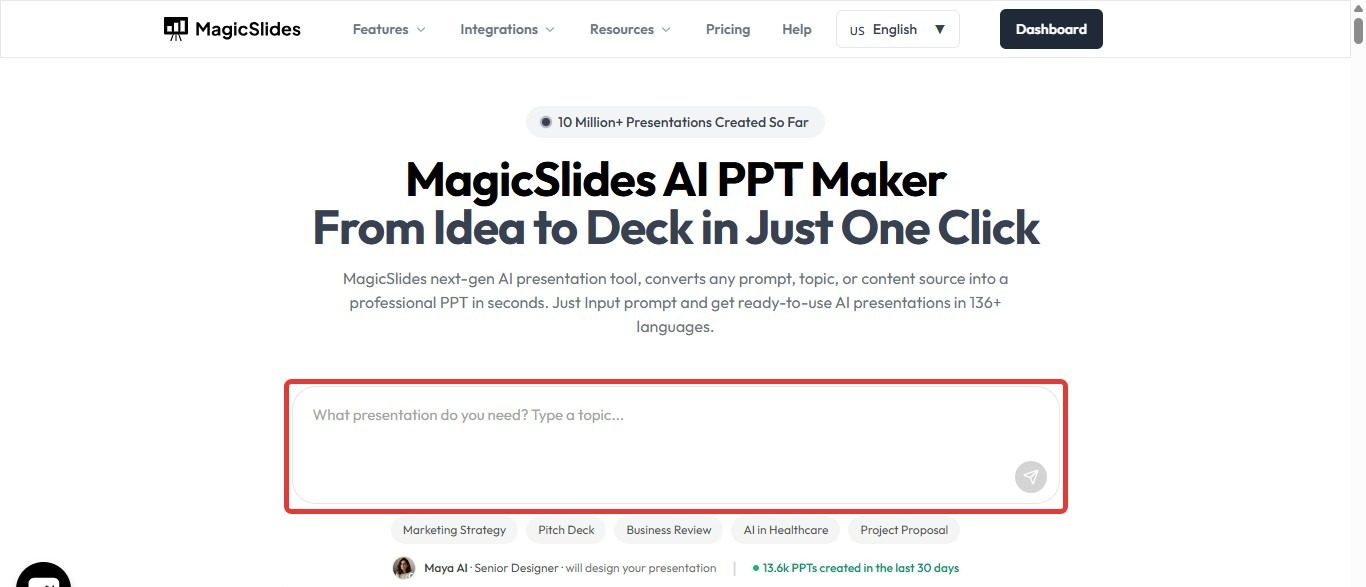
Step 1. To get started, you need to open the MagicSlides software page. Then you have to go to the part where you can chat. This is where you can make presentations about things that people disagree on, and it will help you.
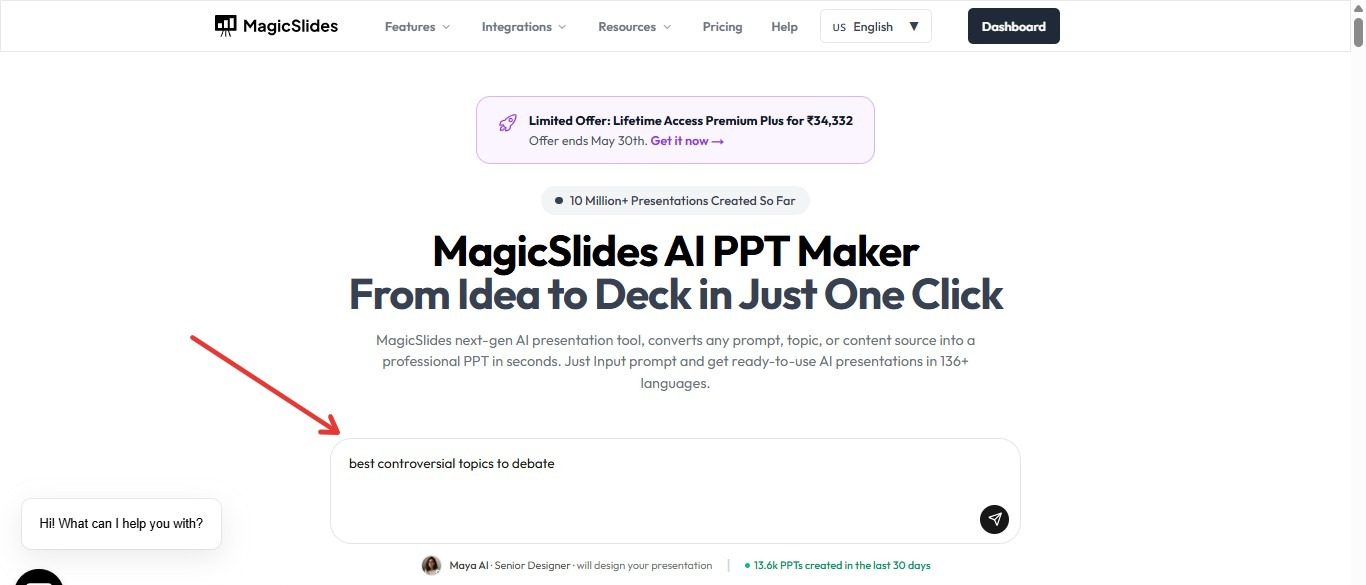
Step 2. Now you have to tell the software what you want to talk about. You can do this by typing what you want to debate in the chat part. For example, you can say something like “Should social media be regulated?”. You can ask for “best controversial topics to debate” to get some ideas.
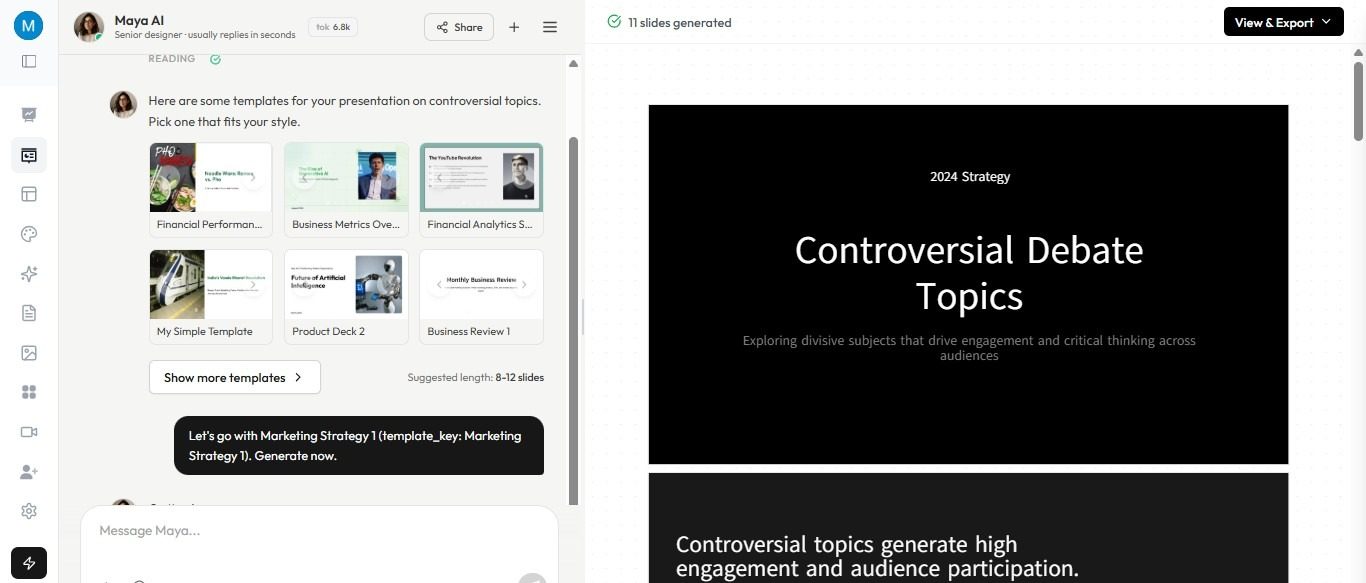
Step 3. The software will look at what you said and make a plan for your presentation.
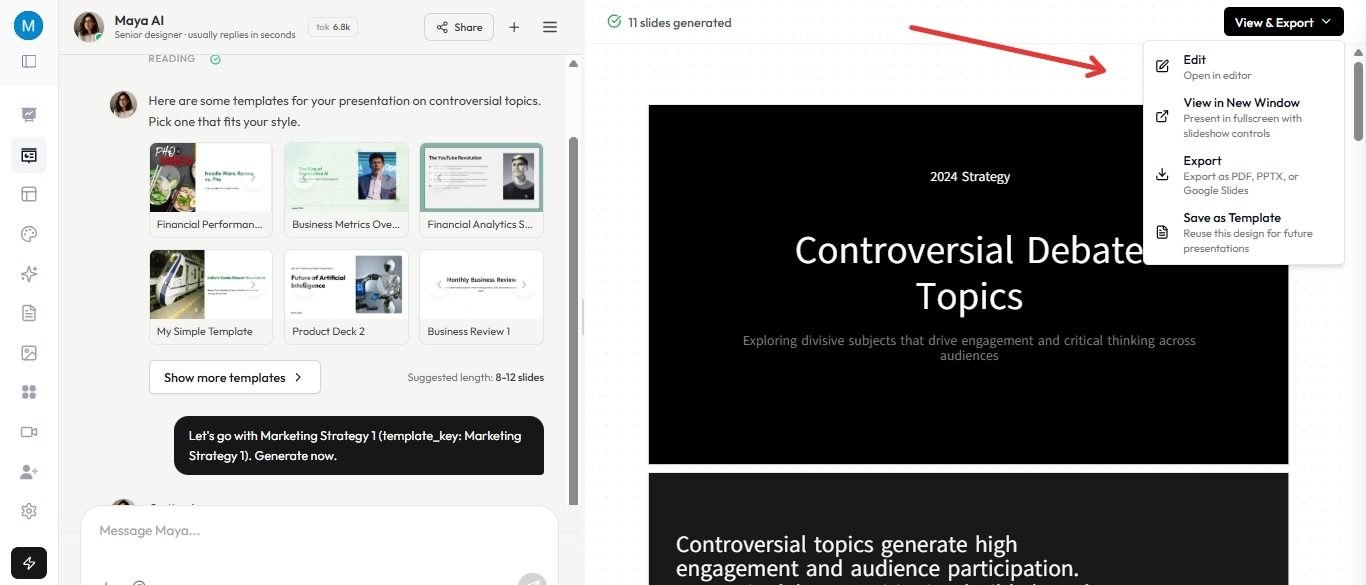
Step 4. After that, you get the option to download. This way you can use your controversial topics for presentation.
Tools like ChatGPT are trained to respond to controversial topics with:
- Balanced perspectives
- Neutral language
- Warnings were needed
- Encouragement of civil discourse
- Avoidance of hate speech or biased content
If you’re using ChatGPT or MagicSlides AI Assistant, you can prompt it to:
- Help structure pros and cons
- Suggest counterarguments
- Turn your argument into a visual deck
- Generate discussion questions
Conclusion
Controversial debate topics encourage critical thinking, communication, and a deeper understanding of complex issues. Whether you’re preparing for a classroom discussion, public speaking event, essay, or debate competition, choosing a topic with strong arguments on both sides leads to more engaging conversations. From artificial intelligence and social media to politics and ethics, the best debate topics challenge assumptions and help participants develop stronger reasoning skills.
Frequently Asked Questions
Q1. What are controversial debate topics?
These are subjects that generate strong opinions and disagreements because they involve social, political, ethical, educational, or technological issues. These topics typically have valid arguments on both sides, making them ideal for discussions, debates, essays, and public speaking events.
Q2. What makes a debate topic controversial?
A debate topic becomes controversial when people hold different beliefs, values, or perspectives about the issue. Topics such as artificial intelligence, free speech, climate change, social media, and government policies often spark debate because there is no universally accepted answer.
Q3. What are the best controversial debate topics for students?
Some of the best debate topics for students include:
- Should homework be banned?
- Should schools allow smartphones?
- Should students use AI for assignments?
- Is online learning better than classroom learning?
- Should school uniforms be mandatory?
These topics are relevant, easy to research, and offer arguments on both sides.
Q4. What are some controversial debate topics for adults?
Popular controversial topics for adults include:
- Should governments regulate AI?
- Is a universal basic income a good idea?
- Should voting be mandatory?
- Is privacy more important than security?
- Should social media platforms regulate content?
These topics often involve politics, economics, ethics, and public policy.
Q5. What are some funny, controversial debate topics?
Funny, controversial debate topics include:
- Is cereal a soup?
- Should pineapple go on pizza?
- Are cats better than dogs?
- Is coffee better than tea?
- Should emojis count as a language?
These topics are great for icebreakers, classrooms, and casual discussions.
Q6. How do I choose a good debate topic?
Choose a debate topic that is relevant, interesting, and has strong arguments on both sides. Consider your audience, the purpose of the debate, and how much information is available for research. The best debate topics encourage critical thinking and meaningful discussion.
Q7. Are controversial debate topics good for public speaking?
Yes. These debate topics are excellent for public speaking because they encourage audience engagement and allow speakers to present evidence, defend arguments, and improve communication skills.


