50+ Art Presentation Topics: Creative Ideas for Inspiring Presentations


Explore inspiring art presentation topics, with tips and descriptions, to craft slides on history, movements, and modern innovations in art.
I think that art presentation topics are ideas that help me show and talk about art in a way that makes sense and is interesting to the people who are listening. When I pick the right art presentation topics I notice that I feel more confident when I am presenting and people seem to like it
At first I would just pick any art topic. Hope it would work.. Then I realized that when my art topic was not very clear my whole presentation did not feel right. Things got better when I started choosing art presentation ideas that were more specific and meant something to me. Art presentation topics that I could really understand and show with pictures.
Whether I was talking about art topics like being creative, with computers or learning about art from the past I found that having the right art presentation topics made everything easier. It made my presentation feel natural. Helped me talk to the audience without trying too hard.
That is when I figured it out: the art presentation topics are not the beginning. They change the whole presentation. I think that is really important to remember when I am choosing my art presentation topics.
How to Choose the Best Art Presentation Topics?
When I started working on presentations, I used to think that picking art presentation topics was the easiest step. But over time, I realized it’s actually the most important one. The right and unique topic for presentation can make your presentation smooth, while the wrong one can make it difficult to explain even simple ideas.
What worked for me was narrowing things down. Instead of choosing broad art topics for presentation like “modern art,” I began selecting more specific ideas like “how social media influences modern art styles.” This instantly made my art presentation topics more structured and easier to present.
In my early presentations, I stuck to easy art presentation topics like color theory or famous artists. These helped me build confidence. As I improved, I started exploring creative art topics such as art and technology or cultural identity in art, which made my presentations more interesting.
I also learned to think about the audience. When presenting in class, I kept my art presentation topics simple and engaging. For seminars, I chose deeper art seminar topics for students that allowed for more analysis.
One thing I never ignore now is visuals. The best art presentation topics always give you room to show examples, which makes everything easier to explain and more engaging.
Why a Great Topic Matters in an Art Presentation
A strong topic can:
- Align with your personal interests and expertise.
- Resonate with your audience and spark meaningful conversations.
- Highlight the significance and impact of art in culture, history, and society.
Whether you’re exploring classical art, modern design, or cultural movements, this list will help you craft an engaging art presentation that stands out.
Here is the List of Top 100+ Art Presentation Topics
When I first started looking for art presentation topics, I wanted to find things that I could really talk about. I did not just look for any ideas, I looked for art presentation topics that I could explain in a way and feel good, about what I was saying. After a while, I figured out that the best art presentation topics are the ones that make people wonder and give me a lot of information to create a story.
To make things simpler, I have put these art presentation topics into groups based on categories that I have found helpful when I was getting ready to give presentations.
Visual Art Presentation Topics
| Topic | Brief Description |
|---|---|
| The Role of Color Theory in Art | Explore how colors influence mood, meaning, and perception in visual art. |
| The Evolution of Painting Techniques | Trace how painting styles and methods have changed over time. |
| Realism vs Abstract Art | Compare realistic and abstract styles and their impact on viewers. |
| The Importance of Composition in Art | Understand how artists arrange elements to create balance and focus. |
| Light and Shadow in Paintings | Examine how artists use lighting to add depth and realism. |
| Symbolism in Visual Art | Analyze hidden meanings behind symbols used in artworks. |
| Minimalism in Modern Design | Study how simplicity shapes modern visual aesthetics. |
| Nature as Inspiration in Art | Explore how landscapes and nature influence artists. |
| Portrait Art and Human Emotion | Understand how artists capture expressions and emotions. |
| The Psychology of Colors | Learn how different colors affect human emotions and behavior. |
Modern & Digital Art Presentation Topics
| Topic | Brief Description |
|---|---|
| Impact of Digital Technology on Art | Explore how technology has transformed artistic creation and sharing. |
| Rise of NFT Art | Understand digital ownership and blockchain in art. |
| AI-Generated Art | Discuss whether AI can truly be creative. |
| Social Media and Artists | Analyze how platforms help artists gain visibility. |
| Graphic Design in Branding | Study the role of design in building brand identity. |
| Animation as Storytelling | Explore how animation communicates ideas and stories. |
| Virtual Reality in Art | Examine immersive art experiences using VR. |
| Digital Illustration Trends | Look at current trends in digital drawing and design. |
| Gaming as an Art Form | Understand artistic elements in video game design. |
| Future of Digital Creativity | Predict how technology will shape future art forms. |
Art History Presentation Topics
| Topic | Brief Description |
|---|---|
| Renaissance Art and Its Influence | Explore how Renaissance ideas shaped modern art. |
| Impressionism vs Expressionism | Compare two major art movements and their styles. |
| Evolution of Sculpture | Trace changes in sculpture from ancient to modern times. |
| Famous Art Movements | Study movements like Cubism, Surrealism, and Baroque. |
| Role of Religion in Art | Understand how religion influenced early artworks. |
| Women Artists in History | Highlight contributions of female artists over time. |
| Greek and Roman Art Influence | Explore classical art’s impact on modern styles. |
| Stories Behind Famous Paintings | Discover the history behind iconic artworks. |
| Baroque vs Classical Art | Compare dramatic and balanced artistic styles. |
| Cultural Influences on Ancient Art | Study how culture shaped early artistic expression. |
Cultural & Social Art Presentation Topics
| Topic | Brief Description |
|---|---|
| Art as a Tool for Social Change | Explore how art influences movements and awareness. |
| Cultural Identity in Art | Understand how artists express identity through work. |
| Art and Political Movements | Analyze the relationship between art and politics. |
| Feminism in Art | Study how art represents gender equality. |
| Art Therapy and Mental Health | Explore how art supports emotional well-being. |
| Environmental Art | Examine art used to raise awareness about climate change. |
| Cultural Appropriation vs Appreciation | Discuss ethical concerns in art and culture. |
| Public Art and Communities | Understand how murals and installations impact society. |
| Art Across Cultures | Compare artistic styles from different regions. |
| Role of Museums | Study how museums preserve and present art. |
Performing Arts Presentation Topics
| Topic | Brief Description |
|---|---|
| Role of Dance in Culture | Explore how dance reflects traditions and identity. |
| Evolution of Theatre | Trace the development of theatre over time. |
| Music as Storytelling | Understand how music conveys emotions and narratives. |
| Classical vs Modern Dance | Compare traditional and contemporary dance styles. |
| Theatre as Social Commentary | Analyze how theatre reflects social issues. |
| Influence of Cinema on Arts | Study how films impact performing arts. |
| Body Language in Performance | Explore non-verbal communication in acting. |
| Cultural Dance Forms | Learn about dances from different cultures. |
| History of Opera | Understand the origins and evolution of opera. |
| Stage Design in Theatre | Examine how stage setup enhances performances. |
Creative & Unique Art Presentation Topics
| Topic | Brief Description |
|---|---|
| Is Graffiti Real Art? | Debate whether street art belongs in mainstream art. |
| Is Art Subjective or Universal? | Explore whether art has fixed meaning or personal interpretation. |
| Art and Science Connection | Study how creativity and science intersect. |
| Art Inspired by Emotions | Understand how feelings influence artistic creation. |
| The Concept of “Ugly” Art | Analyze unconventional beauty in art. |
| Art in Everyday Life | Discover how art exists beyond galleries. |
| Future of Creativity | Predict how art will evolve in coming years. |
| Art as Communication | Explore how art conveys messages without words. |
| Role of Imagination in Art | Understand the importance of creativity in artistic work. |
| Why People Connect with Art | Study emotional and psychological connections to art. |
Tips for a Successful Art Presentation
- Start with a Hook: Begin with a powerful image, quote, or story to grab attention.
- Use Visual Aids: Let images and videos take center stage art is visual by nature!
- Context is Key: Provide historical or cultural background to deepen the audience’s understanding.
- Invite Discussion: Ask open-ended questions to engage your audience in interpreting art.
- Rehearse: Practice to ensure a smooth and confident delivery.
Convert Art Presentation Topics into Impactful Slides With AI
Choosing the right art presentation topics is the beginning. The real challenge is making those topics make sense to your audience. Art can be abstract. If your ideas aren’t structured well, your presentation can get confusing fast.
I found that breaking down my art presentation topics into parts really helped. I start by introducing the topic in terms, then explain the main idea, add a visual example, and end with key points. This approach made complex art presentation ideas easier to follow. Whether I was working on art history topics or modern art topics, keeping things simple helped.
Tools, like MagicSlides AI Presentation Tool, made a difference for me. While spending hours figuring out how to structure my slides, I could just enter my art presentation topics, and the tool would organize everything into a clear flow. It saved me time. Removed a lot of confusion.
- It also helped simplify creative art topics, making them easier to present.
- This was especially helpful when I was just starting.
No matter how simple or advanced your art presentation topics are, having a structure makes your presentation more effective.
Your audience will understand it better.
Simple Framework to Structure Art Presentation Topics
Step 1. Start by explaining your art presentation topics in simple words so your audience understands the basic idea.

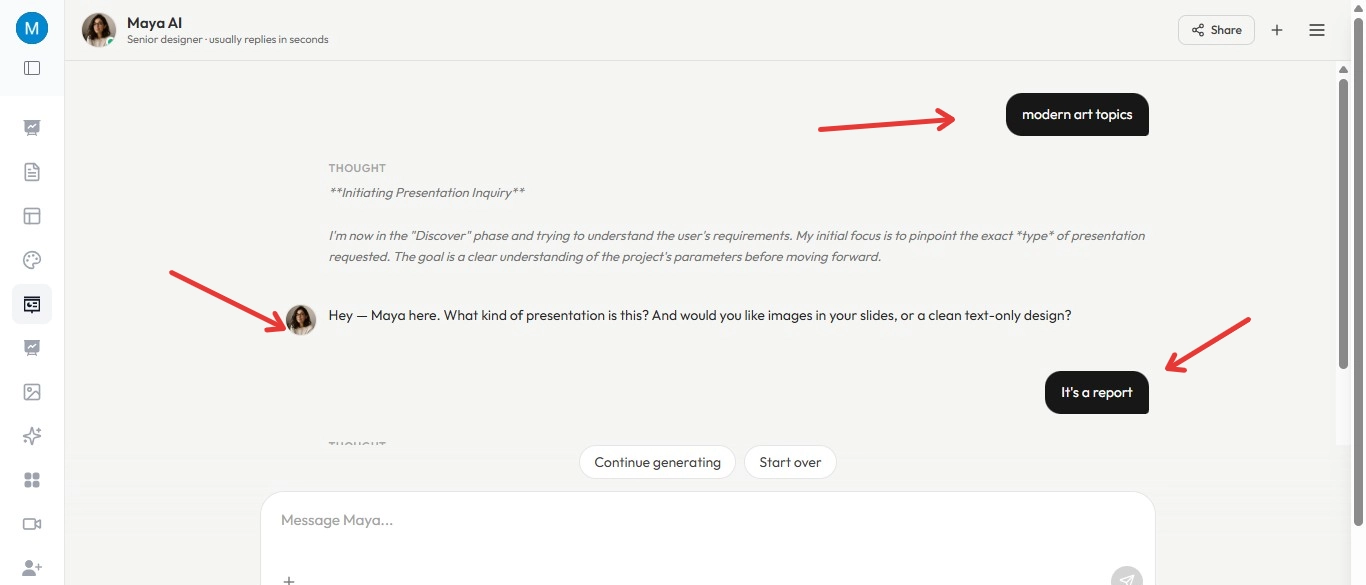
Step 2. Enter your topic or prompt, like “modern art topics” or “art history presentation topics,” into the tool to generate a structured outline.
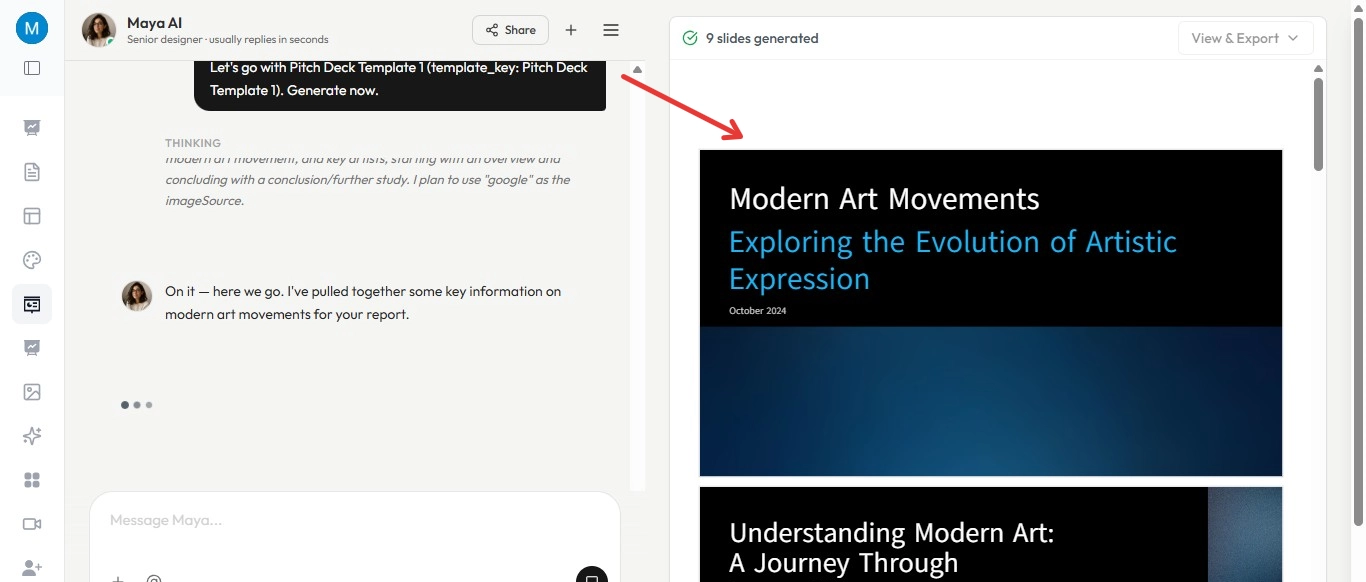
Step 3. Review the generated flow, which includes key points and a logical structure for your slides.
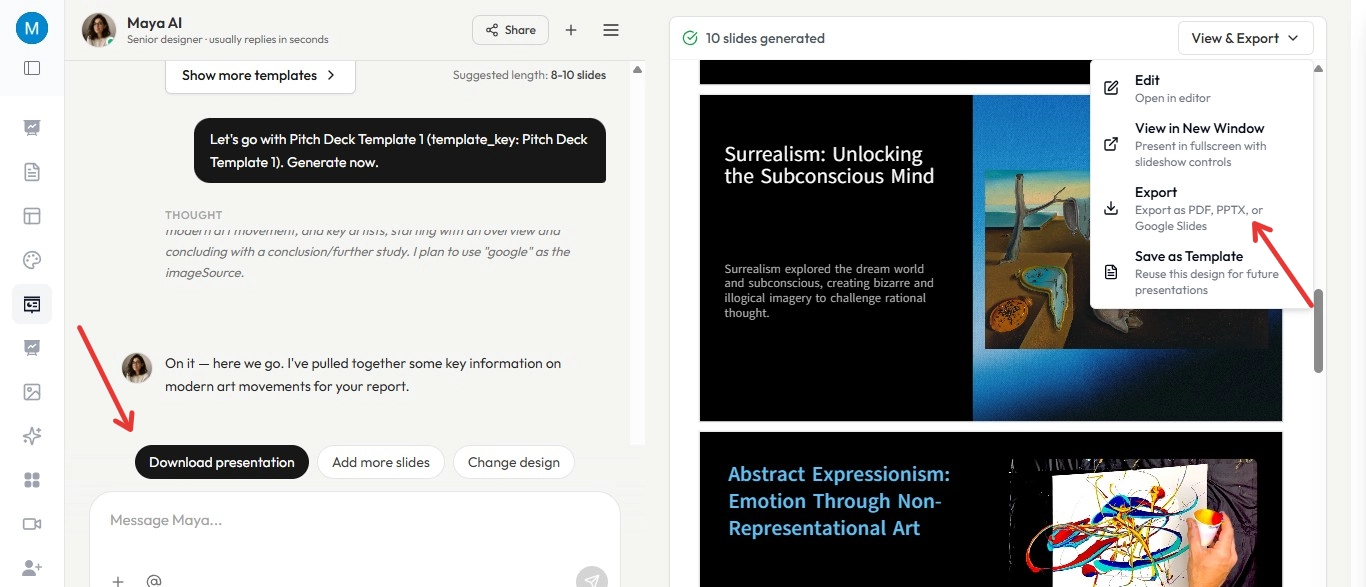
Step 4. Finalize and export your presentation, ensuring your art presentation topics are clear, organized, and ready to present.
Conclusion
Looking back at my journey, I have realized that choosing the right art presentation topics is what really sets the tone for everything that follows. It is not about picking something that is creative. It is about selecting an art presentation topic that you can explain in a clear manner, supported with visuals, and connect with on a personal level.
The best art topics for a presentation are the ones that balance being interesting and being clear. When I started focusing on art presentation ideas that felt relevant and engaging. Whether from art topics, art history presentation topics, or creative art topics. My art presentations became much easier to deliver and far more impactful.
If there is one thing I would suggest, it is this: do not chase complicated art presentation topics just to impress people. Instead, choose art presentation topics that allow you to tell a story, share your insights, and keep your audience engaged from the start to the finish of your art presentation.
That is what turns an art presentation into something that people actually remember about the art presentation topics you discussed.


