How to Make a Dissertation Presentation (Tips to Stand Out Easily)


How to make a dissertation presentation that is engaging and professional. Learn how to present a dissertation presentation that helps you stand out.
Creating a dissertation presentation is a critical task, as presenting months or even years of research clearly and concisely to your audience can be challenging. However, delivering your work effectively is just as important as writing it.
If you’re here, this means you’re wondering how to make a dissertation presentation. No worries! Today, I’ll resolve all your queries related to this. In this guide, I’ll walk you through not only how to make PPT attractive but also how to present a dissertation confidently so you can impress your audience easily.
Making a good dissertation presentation is about explaining your ideas in a way that your audience can easily understand and remember. That’s why it’s important to understand why your dissertation presentation really matters. So, let me explain this first.
Why Your Dissertation Presentation Matters?
Your dissertation presentation matters because it is your chance to show the value of your research. No matter how well your dissertation is written, if you cannot explain it clearly, your audience may not fully understand, and your knowledge is wasted.
A strong presentation:
- Helps you highlight your key points
- Explain your ideas in a simple way
- Leave a good impression on your audiences
- Shows your confidence and how well you understand your own research
Overall, a dissertation presentation explains your research journey in an effective way.
Once you understand this, the next step is to learn how to create your dissertation presentation step by step.
How to Make a Dissertation Presentation?
The process becomes much easier when you break it down into simple steps. Once you follow a clear approach, creating a dissertation presentation will be a breeze. Let’s go step by step to see how you can do it effectively:
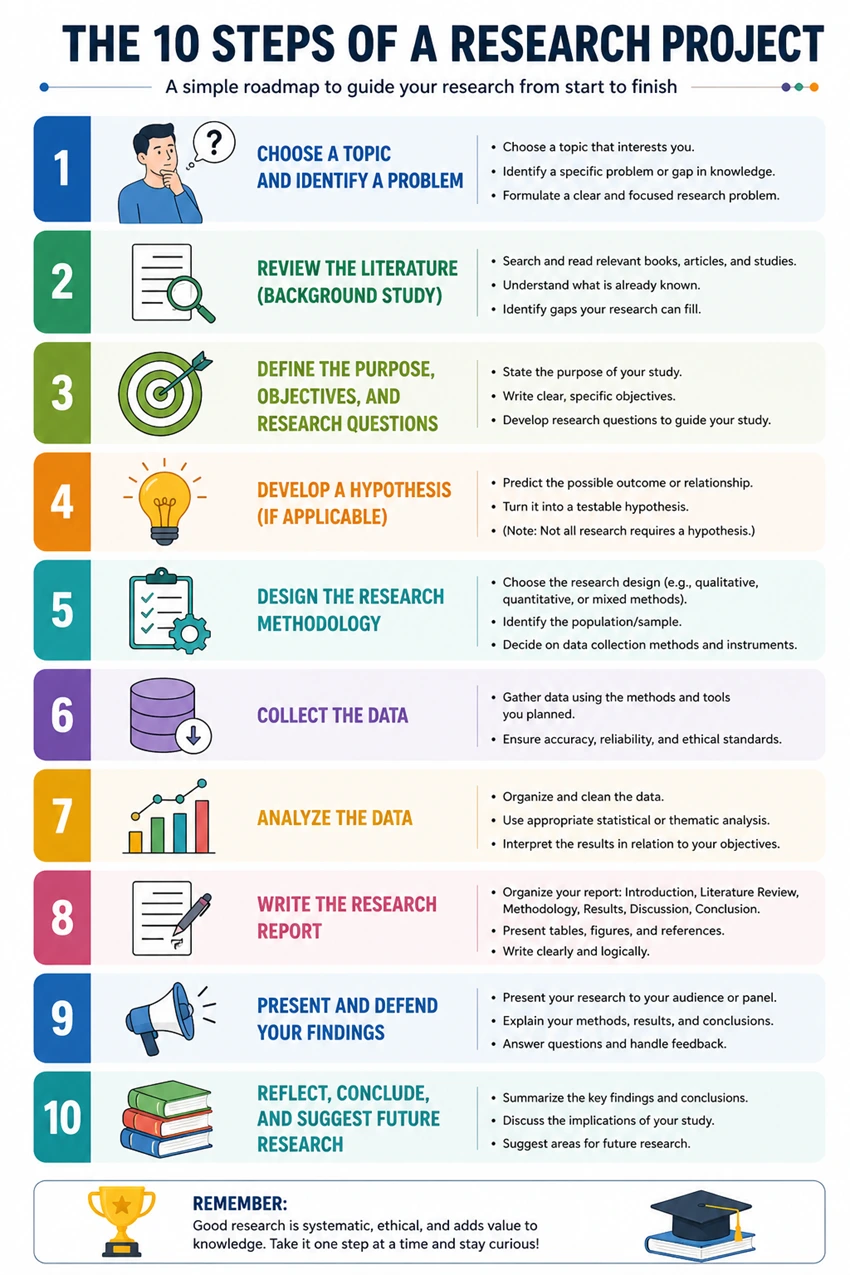
#Step 1. Understand Your Audience
Before you even open PowerPoint, make sure you understand:
- Time limit
- Audience type
- Evaluation criteria
Once you’re clear about these points, it becomes much easier to decide what to include and what to skip in your presentation. Based on this, you can start structuring your presentation in a clear order so your audience can follow your ideas easily.
#Step 2. Structure Your Presentation Clearly
A strong structure is key when learning how to make a dissertation presentation. Here’s the general outline you can consider:
- Title Slide
- Introduction
- Literature Review
- Methodology
- Results / Findings
- Discussion
- Conclusion
- Recommendations / Future Work
- Q&A Slide
Example presentation timeline:
- Introduction = 2 minutes
- Literature Review = 2 minutes
- Methodology = 3 minutes
- Results = 4 minutes
- Discussion = 3 minutes
- Conclusion = 2 minutes
#Step 3. Keep Slides Simple
Now follow the 6×6 rule:
- Max 6 bullet points
- Max 6 words per line
Instead of long paragraphs or complex text, use:
- Charts
- Graphs
- Diagrams
- Keywords instead of paragraphs
These steps help you to make your presentation more professional and engaging. Additionally, it is important to use visuals in your presentation to engage your audience from the beginning.
To improve slide visuals further, check out how to improve slide design for presentations for more advanced tips.
This is essential when learning how to make a dissertation presentation that engages your audience.
#Step 4. Use a Consistent Design
Always:
- Use 1-2 fonts only
- Consistent color scheme
- Ensure high contrast (dark text on light background)
- Avoid flashy animations
Choosing the right typography also matters; refer to the best fonts for PPT to enhance readability and professionalism.
#Step 5. Highlight Key Points
Don’t need to present your entire dissertation. Instead, focus on:
- Most important
- What adds value
- What supports your research contribution
#Step 6. Practice Your Delivery
When it comes to how to present a dissertation, delivery is everything.
Here’s what to do:
- Practice aloud at least 3-4 times in front of a mirror, or friends
- Time yourself
- Record and review your presentation
- Prepare for possible questions
Before presenting, make sure everything is ready using a presentation preparation checklist to avoid last-minute mistakes.
#Step 7. Prepare for Questions
Examiners ask about:
- Research limitations
- Methodology choices
- Data interpretation
Prepare answers in advance to easily impress your audience and show your expertise in your research.
By following these steps on how to make a dissertation presentation, you can create a clear and engaging dissertation presentation that explains your research effectively and leaves a strong impression on your audience.
How to Make a Good Dissertation Presentation?
These tips can improve your presentation:
- Start with a strong opening like user pain points, your real-life story, or even any visual, which will be eye-catching
- Maintain eye contact with your audience
- Speak clearly to the audience. For the same, practice at least 2 times before presenting
- Avoid reading directly from slides, as it loses impact on your audience and makes you look unprofessional
- Use real examples to explain complex ideas to engage your audience
By following these simple tips, you can present your dissertation more confidently and make your ideas easier for your audience to understand.
How to Make a Dissertation Presentation – Cutting-edge Tool to Consider
Creating a clear and professional dissertation presentation can be time-consuming, especially when trying to balance content and structure. Using a smart tool can simplify this process and help produce better results in less time.
MagicSlides AI Presentation Maker is a helpful tool for creating dissertation presentations quickly and easily. It uses artificial intelligence to turn text, documents, or even a topic into presentation.
Users only need to enter their content or upload a file, and the solution automatically generates a structured presentation with headings and visuals (according to the text written or prompt).

This makes it useful for those who want to save time by designing slides from scratch. After you generate a complete slide deck for free using this AI-powered solution, you can export that presentation as PPTX (Microsoft PowerPoint) or Google Slides.
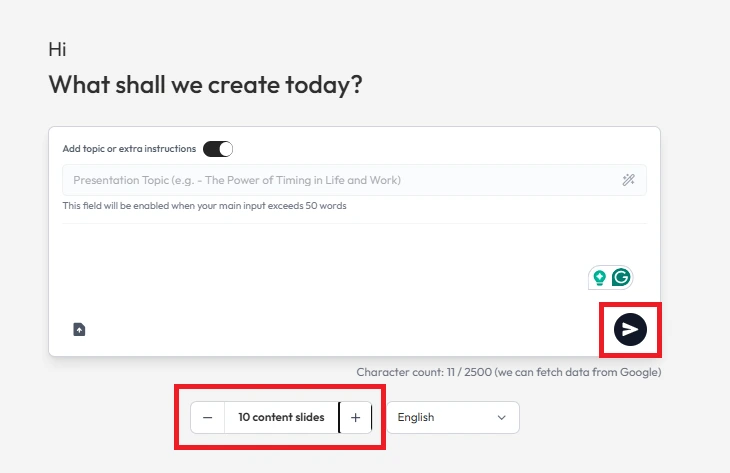
Once you export, you can modify those slides into PowerPoint or Google Slides. However, after generating the slides, if you want any changes, just write and the MagicSlides AI to change those, like change background, large fonts, add visuals, or any other changes you want.
This makes it easier to create clear and engaging slides, especially when preparing a dissertation presentation under time pressure.
Don’t waste time on making your dissertation presentation from scratch, just try this Text to PPT Maker for free now, paste your research doc or text in it, and the rest it will handle.
Author’s Verdict
Learning how to make a dissertation presentation is about clarity and confidence. The key is to:
- Keep things simple
- Focus on key insights
- Practice thoroughly
If you follow these steps, you’ll not only learn how to make a good dissertation presentation, but also how to present a dissertation effectively and leave a strong impression on your audience.
Always double-check:
- Slides are error-free
- Fonts and formatting are consistent
- Presentation fits within the time
- Backup file is ready (USB/cloud)
People Also Ask
1. How long should a dissertation presentation be?
Most presentations last between 10 and 20 minutes, depending on university guidelines.
2. How many slides need to be included in the dissertation presentation?
Aim for 10-15 slides for a 15-minute presentation.
3. What is the best way to start a dissertation presentation?
Start with a clear problem statement or a real-life scenario.
4. How to make a dissertation presentation engaging?
To make your dissertation presentation engaging, focus on keeping things simple and interesting for your audience. Use visuals like:
- Charts
- Images
- Diagrams
…instead of long text, so people don’t get bored. You can also add real-life examples or small stories to make your points easier to understand. Most importantly, interact with your audience through small questions so they stay focused and involved throughout your presentation.
5. How do I handle difficult questions?
Handling difficult questions becomes easier when you stay calm and think before answering. Listen to the question carefully, and if you don’t understand it, politely ask the person to repeat or clarify. After listening, if you don’t know the answer, calmly say that you’re not fully sure, but share your understanding.


